Tradition:Catholic
Covenant
allThe sacred oath-bound promise God made with Abraham and renewed with Isaac, encompassing land, descendants, and universal blessing—central to biblical theology.
Seed/Offspring
allGod's pivotal promise to Abraham that He will give this land to his descendants. In the New Testament, it culminates in Christ as the singular 'Seed' who inherits the promise.
Guarantor
allJudah pledges himself as surety for Benjamin, bearing the blame forever if he fails. This typologically foreshadows Christ as the guarantee of the new covenant (Heb 7:22).
Land of Moriah
allThe region where Abraham offered Isaac, later identified as the mountain where Solomon built the Temple. Prefigures Jerusalem as the center of true worship.
Fear Not
allA recurring divine formula of reassurance, signifying God's presence and protection as He leads His people into new assignments, here accompanying the journey into Egypt.
Abraham
allChanged from Abram to Abraham (אַבְרָהָם), meaning 'father of a multitude of nations,' marking the new covenant identity and mission.
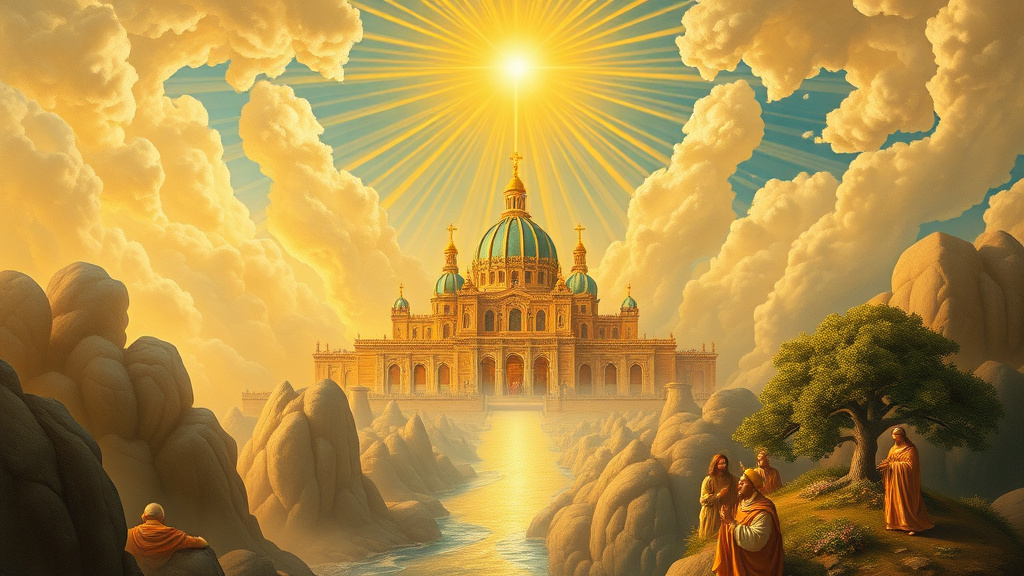
How does Revelation's vision of the "New Jerusalem" shape the Church's eschatological hope?
Is the heavenly city the Church's true home?
In Catholic tradition, how is the New Jerusalem connected to sacramental life?
What correspondence exists between the heavenly Jerusalem and earthly sacraments?
Do the four horses unfold simultaneously or in a strict sequence?
The Lamb opens each seal—is this a historical sequence or overlapping present signs?
Why is the temple omitted within the city, and what does this mean for a Catholic view of sacred space?
No temple exists, for the Lord and the Lamb are themselves the temple.
How far does the authority of Death on the pale horse extend?
Hades followed with him—does this reveal the limits and reach of Death's ultimate power?
Why are the glory and honor of the nations brought into the New Jerusalem?
Exploring the role of all peoples in the new city and the universality of salvation.