Tradition:Protestant
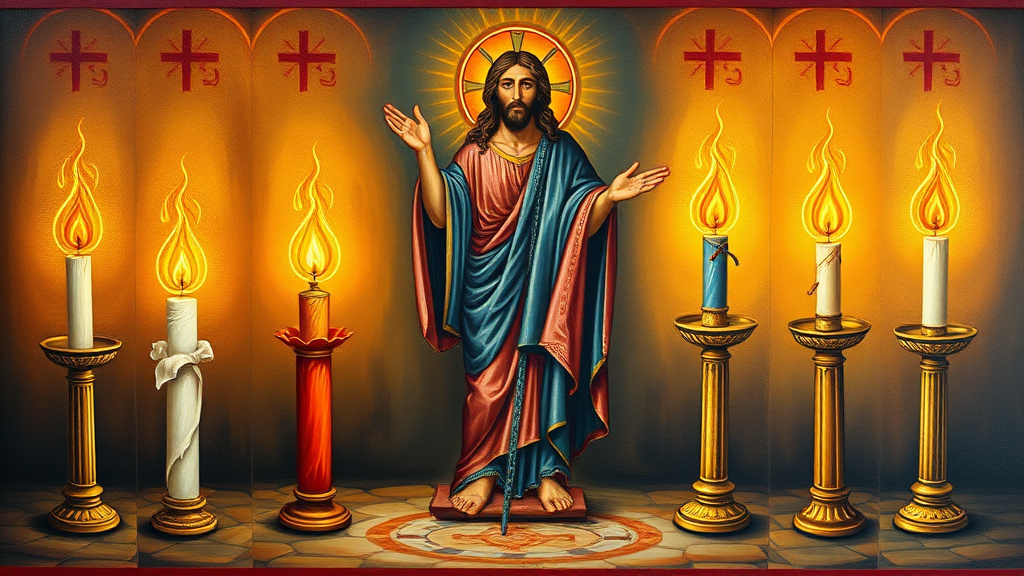
Revelation 10:4
protestant「And when the seven thunders uttered their voices, I was about to write: and I heard a voice from heaven saying, Seal up the things which the seven thunders uttered, and write them not.」
Revelation 2:24
protestant「But to you I say, to the rest that are in Thyatira, as many as have not this teaching, who know not the deep things of Satan, as they are wont to say; I cast upon you none other burden.」
Revelation 18:24
protestant「And in her was found the blood of prophets and of saints, and of all that have been slain upon the earth.」
Revelation 13:8
protestant「And all that dwell on the earth shall worship him, every one whose name hath not been written from the foundation of the world in the book of life of the Lamb that hath been slain.」
Revelation 12:3
protestant「And there was seen another sign in heaven: and behold, a great red dragon, having seven heads and ten horns, and upon his heads seven diadems.」
Revelation 3:13
protestant「He that hath an ear, let him hear what the Spirit saith to the churches.」
Prophetic Dream
allGod reveals future events through dreams; Pharaoh's double dream of seven kine and seven ears foretells abundance and famine, showing God's absolute sovereignty over history.
Sabbath Rest
allGod's resting on the seventh day from all creative work and hallowing it establishes the foundation for Sabbath theology, the Ten Commandments, and weekly worship in Israel.
Why are the twelve tribes and twelve apostles listed side by side on the city's foundations and gates?
Old Testament tribes alongside New Testament apostles—what tension is revealed?
Why are the names of the twelve apostles inscribed on the foundations of the New Jerusalem?
Considering the apostles' role in the city's foundations and the continuity of the Church.
Is the rider on the white horse Christ or an antichrist figure, and how have Reformers traditionally interpreted him?
The identity of the crowned rider with a bow has sparked a millennium of debate—how did Luther and Calvin each understand this figure?
What does the Ephesian church's loss of 'first love' warn contemporary faith communities about?
How can churches uphold doctrine without losing fervent love?
Why does the New Jerusalem have twelve gates with twelve angels, and what is the significance of this number?
Exploring the symbolic connection between gates, angels, and the twelve tribes in John's vision.
Is the rider on the white horse Christ or an antichrist figure, and how have Reformers traditionally interpreted him?
The identity of the crowned rider with a bow has sparked a millennium of debate—how did Luther and Calvin each understand this figure?